Why Matter Wins Over Antimatter
A new discovery at CERN
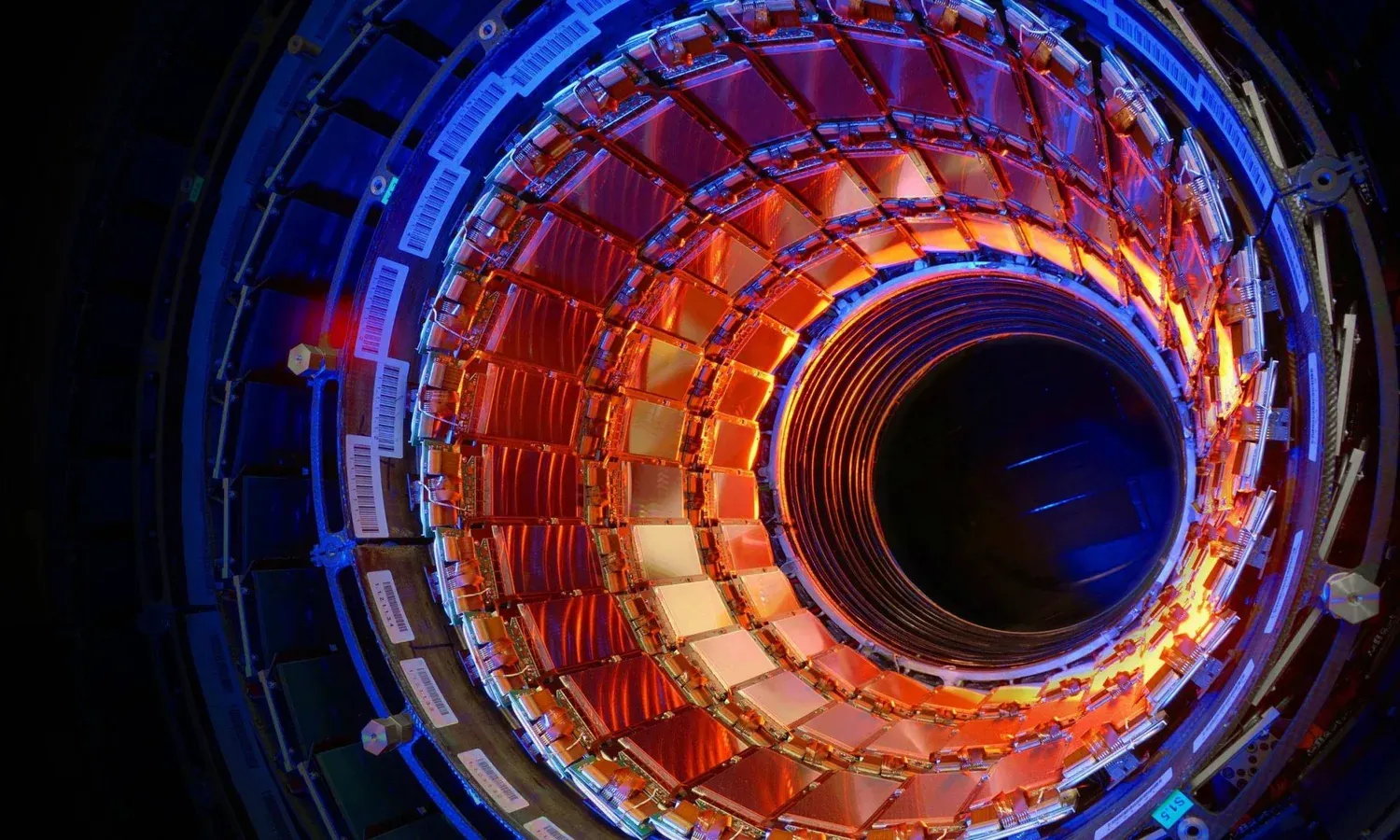
The universe is mostly made of matter and a small portion of antimatter. From what we have learnt at school, the universe started with the Big Bang. According to the Big Bang theory, there should be an equal amount of matter and antimatter formed in the process. Since matter and antimatter destroy each other when they meet, the universe should have ended up with only radiation and no galaxies, stars, or people. Yet, clearly, matter survived.
Many physicists believe that there is something called charge-parity (CP) violation which causes this reason, meaning that matter and antimatter do not behave in the exact same way.
Experiments at CERN
Scientists at the Large Hadron Collider (LHC) in Geneva collided protons together with lots of energy. This often produced short-lived particles and a special type of baryon called the beauty-lambda baryon . Baryon is a particle which is made up of three smaller particles called quarks. Protons and neutrons are baryons. The scientists studied how these baryons decayed into other particles, and compared the results with their antimatter partners, called anti-beauty-lambda baryons .
Since both matter particles and their antimatter partners are created, this means that beauty-lambda baryons and anti-beauty-lambda baryons appear together in the detector. Scientists further studied how these baryons decayed into other particles by comparing the results with their antimatter partners and by reconstructing the decay tracks of both.
Results
Researchers recorded about 80,000 decays and found that beauty baryons decay slightly more often than anti-beauty baryons. Surprisingly, this difference was only a few percent, but it was highly significant with less than one in five million chances of being a random result. This proved that CP violation also happens in baryons.
Even though this is a major step, the effect is still not large enough to explain why matter survived after the Big Bang. There is a current theory called the Standard Model. This can explain small CP violations, but probably not enough to account for the entire imbalance.
Physicists are now looking at other particles, especially neutrinos, which may also hide CP violation. Large experiments in underground labs are being built to test this.
The discovery of CP violation in baryons at CERN is a breakthrough. It shows that matter and antimatter do not behave in exactly the same way, even in the particles that make up everyday matter. While it does not completely solve the mystery of why the universe exists, it brings us closer to the solution and points the way for more discoveries in the future.